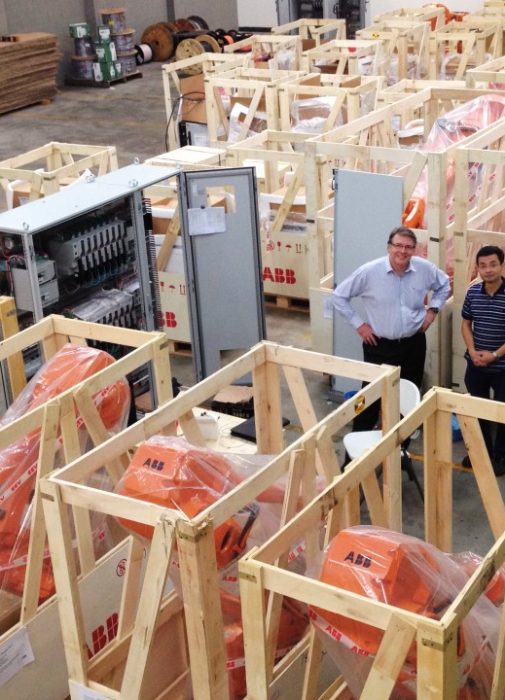
"Australian manufacturers must think differently. While European or Asian factories might dedicate entire facilities to a single product line, our market requires solutions that can handle greater variety with shorter runs, all without sacrificing profitability." explains Dr Paul Wong, founder of Applied Robotics.
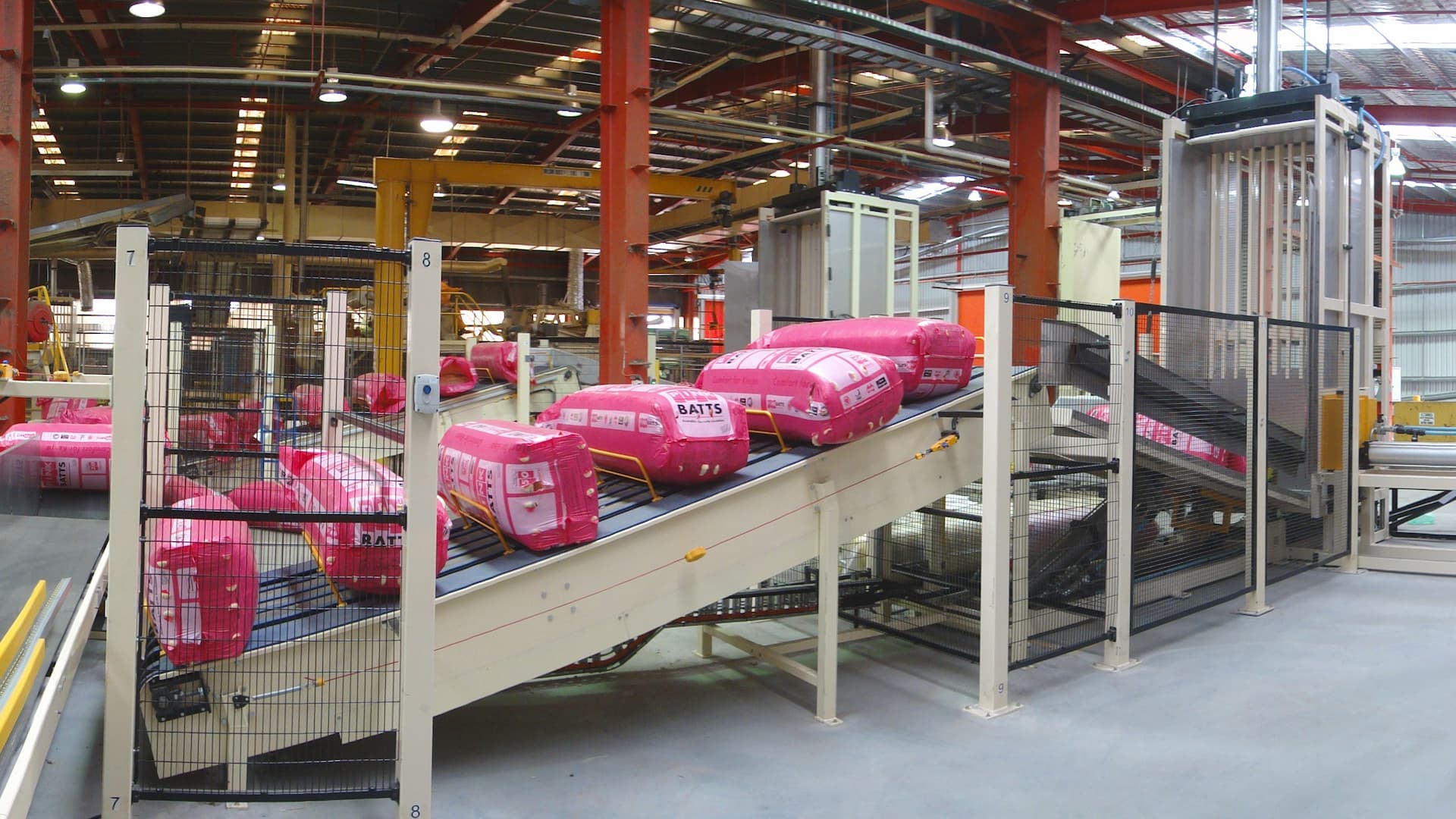
The most financially viable option comes down to the number of axes the product is required to move. If only 1 or 2 axis movement is required then an automated machine, such as a conveyor belt, is ideal from a functional and financial point of view. Maintenance and replacement are more affordable, and it is less complex resulting in faster task execution and fewer people to train.
If 3 or more movement axes are needed, robotics is the superior option as it is more efficient and cost-effective. In more complex solutions, numerous specialty machines can be integrated to complete the same task with less finesse and efficiency.
Contact us to take advantage of Applied Robotics’ Automation Discovery Program (ADP), a free observation workshop that can help you identify if speciality machines or robotics are suitable for your automation objectives.
Breaking free from rigid automation systems
ABB Robotics’ Robot Family
Four innovations reshaping our factory floors
Walk into advanced Australian factories today and you'll see four key technologies working together to create manufacturing environments that can pivot as quickly as the market demands:
01
Robots with powerful and precise product handling
At the heart of this revolution are machines that move with purpose and precision:
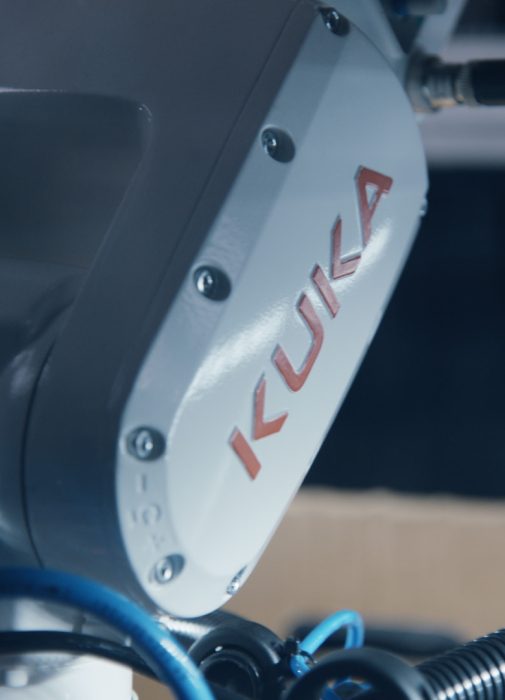
Articulated robots: These multi-jointed arms bend and twist like a human arm, reaching into tight spaces one moment and lifting heavy loads the next. With capacities from 1kg to over 1 tonne, they’ve become the versatile workhorses of modern factories.
SCARA robots: These fast-moving ‘Selective Compliance Articulated Robot Arms’ execute up to 60 precise movements per minute, assembling small components with speed and consistency that human hands can’t keep up with.
DELTA robots: Suspended from above, these parallel robots zip around at dizzying speeds – up to 120 picks per minute – their synchronised movements resemble a choreographed dance as they sort and pack products.
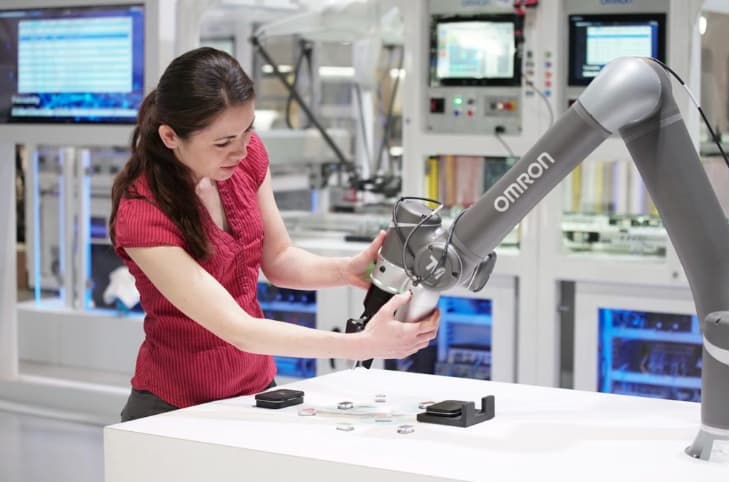
COBOTs: Unlike their caged counterparts, ‘Collaborative Robots’ work shoulder-to-shoulder with humans with in-built safety systems, combining human judgment with mechanical precision.
COBOTs can work unguarded alongside an operator
“The global adoption of industrial robots has dramatically reduced costs while increasing capabilities,” explains Dr Wong.
“With 4.3 million industrial robots installed worldwide as of 2023, up from 1.3 million in 2013, these technologies are mature, reliable and more accessible than ever. While China leads with 250,000 installations, Australia has only about 8,000 units – showing significant opportunity for growth.”
02
Smart motion systems – ‘a dance of coordinated movement’
Beyond robots, intelligent transport and gripper systems create factory-wide coordination:
Programmable work carriers that smoothly shuttle components between operations
Smart grippers with tactile sensing that can handle anything from delicate biscuits to heavy metal components
Soft servo technology that allows robots to apply precise, controlled force rather than just positioning, essential for delicate assembly or surface finishing
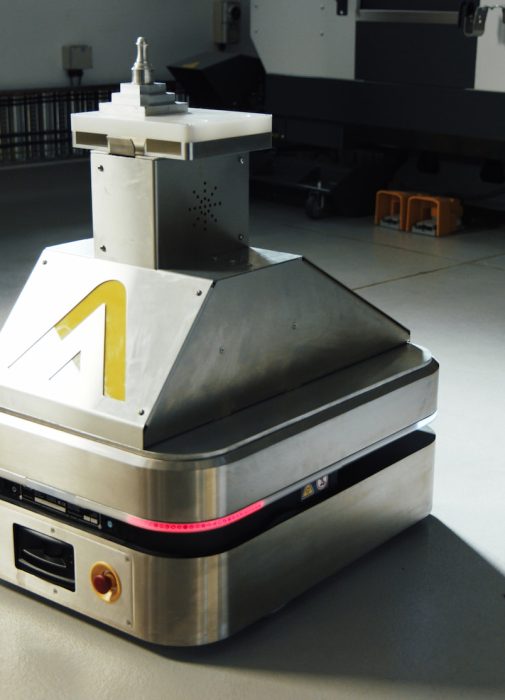
Autonomous Mobile Robots (AMRs) that navigate freely through facilities, not on fixed paths, adapting their routes in real-time as things change
This integration creates what Dr Wong describes as ’a dance of coordinated movement’ where products flow smoothly through production without the rigid infrastructure of traditional automation.
03
Advanced 3D sensing for a soft touch
The ability to perceive and adapt to variations makes all the difference:
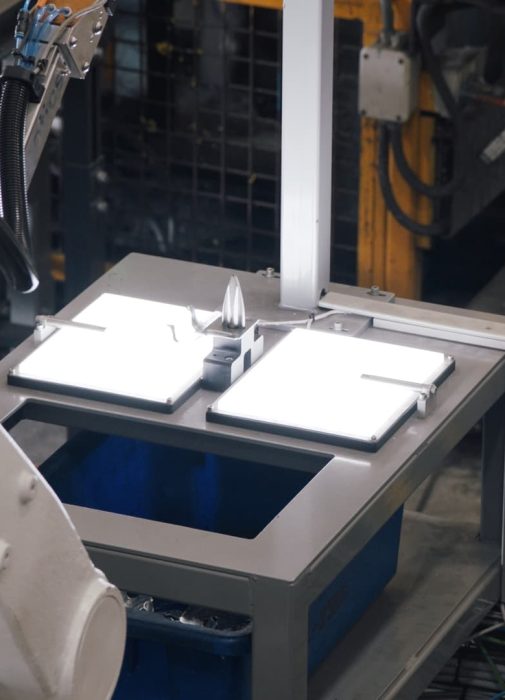
3D vision systems that identify and inspect components regardless of orientation
Force and torque sensors that allow precision assembly with a gentle touch
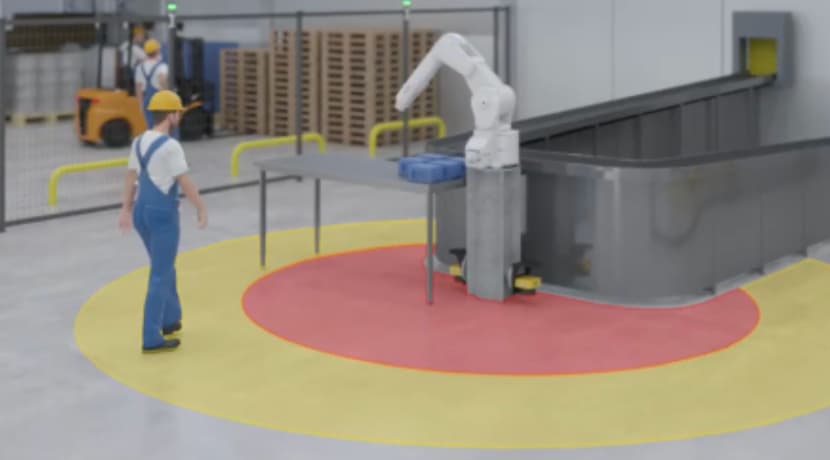
Soft guarding systems that create safe human-robot workspaces without physical barriers
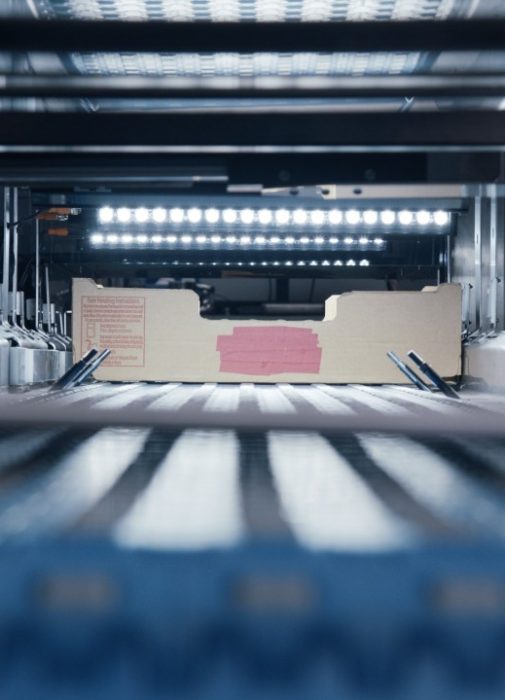
Capral Aluminium’s packing system shows these technologies in action. Their system utilises advanced 3D cameras to identify over 6,000 unique aluminium profiles – even with notoriously difficult reflective surfaces – and then determines optimal picking and packing strategies on the fly.
Soft guarding allows safe operation without barriers
04
Advanced software ‘brains’ using data and AI
Manufacturing Execution Systems (MES) and other advanced software – once only affordable for large enterprises – now act as the affordable, cloud-based brains behind the operation, tying everything together:
AI algorithms that make complex decisions without explicit programming
Digital twins that simulate processes before implementation, eliminating costly mistakes
Automated programming that translates CAD models into robot instructions in minutes, not days
Smart grippers enable delicate force grip
“When we deployed Australia’s first AI-based factory automation system for Capral in 2018, the intelligent algorithm could identify, grasp and nest each unique extrusion shape in real-time – something impossible with traditional automation.
“This concept was also central to Arnott’s revolutionary biscuit assortment system, which precisely processes up to 105 biscuits per second,” explains Dr Wong.
Measurable payoffs for Australian manufacturers
The business case for adaptive automation goes well beyond labour savings. Applied Robotics has helped deliver competitive advantages ideally suited to Australian conditions:
One system, endless variations
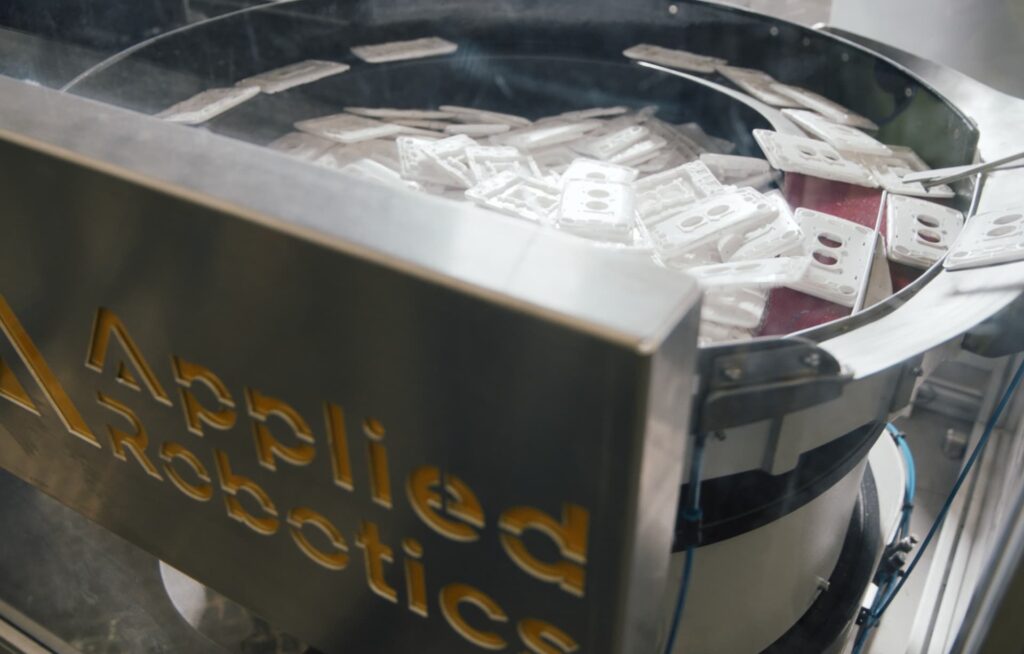
When Legrand Australia needed to maintain local light switch manufacturing in the face of offshore competition, they turned to adaptive automation. We designed a system that handles configurations from single switches to six-gang units with minimal changeover time, doubling production output while simultaneously reducing labour requirements.
Making small runs profitable with a double production rate
Macnaught’s semi-autonomous assembly solution demonstrates how Australian manufacturers can make smaller runs profitable. The system handles over 110 SKUs of industrial equipment while doubling production rates – precisely the flexibility required to meet Australia’s diverse market demands.
Bringing manufacturing back home
“When products can’t be produced cost-effectively locally, they inevitably move offshore. Adaptive automation helps Australian manufacturers compete on factors beyond just labour cost – enabling some operations to be brought back onshore,” notes Dr Wong
Technology that grows with you
Unlike fixed automation, which becomes obsolete when products change, modern systems can be reprogrammed to meet new requirements, protecting capital investments over the long term.
The results speak for themselves.
Capral Aluminium’s implementation of AI-powered robotic packing slashed freight volumes by 50% while accelerating distribution and improving quality.
What’s remarkable is that this was achieved while handling an ever-changing range of 6,000 unique profiles with customisations – precisely the kind of challenging environment where traditional automation would fail.
At an Australian audio technology manufacturer, our innovative assembly system achieved a 95% first-pass success rate, reducing the number of operators required from 2-3 to a single operator.
How to make automation work in your operation
After guiding over 700 automation projects across diverse industries, Dr Wong and the Applied Robotics team have seen the good, the bad and the costly.
"Without thoughtful planning, the hard truth is that up to 80% of manufacturing projects fail to achieve either business case target costs or timelines, despite no limitations with the technology itself," he notes.
To avoid becoming part of that statistic, Applied Robotics apply three human-centred principles:
01
Start with the big picture – a process approach
Look beyond individual machines to the entire process flow. Consider how materials, information and finished products move through your operation. The most elegant solution for one department might create bottlenecks elsewhere.
02
Sweat the small stuff
Successful implementations require meticulous attention to specifications, edge cases and integration points. These can make or break commercial success over time. Rigorous testing and validation before implementation aren’t optional luxuries – they’re essential investments.
03
Champion your project
Every successful automation project needs a dedicated leader who can bridge technical and business perspectives while driving the project to completion. Without this champion, even the best technology can falter.
“The planning phase has the most influence on final results. The most brilliant project management or technology solution cannot overcome a poorly conceived business case,” explains Dr Wong.
Collaborative innovation is the future of Australian manufacturing
As global competition intensifies, Australian manufacturers are discovering that their traditional disadvantages – smaller runs, higher customisation – can become strengths with the right technology. From Arnott's delicate biscuit sorting to precision electronics assembly, these proven solutions deliver results.
"Since 1985, our driving vision has been to transform Australian industry into a globally competitive manufacturing powerhouse. With these technologies, local manufacturers can not just survive but lead in global markets," says Dr Wong.
For Australian manufacturing, success isn’t about competing on volume – it’s about leveraging adaptive technologies to create competitive advantages through flexibility, quality and innovation.
Adaptive automation breathes new life into the local industry with systems that adapt as quickly as market demands change, turning traditional disadvantages into our greatest strengths. And the transformation is just beginning.