Queensland’s manufacturing grants are open. Now’s the time to make automation pay off.
With $79.1 million in Transforming Queensland Manufacturing grants on the table, more Australian manufacturers are weighing up automation, encouraged by a national push to make it more accessible. Here’s how to get the biggest bang for your buck.
The events of recent years have underlined the importance of making things here so we can control our own supply chains in a fragile market. Recognising the urgency, governments across the country are putting money where their mouth is.
In February 2026, the Queensland Government committed $79.1 million over three years to tool up local manufacturers. It’s one of several government programs backing onshore production.
If you’ve been on the fence about automation, it may be time to make a move.
TQMGP is a competitive grants program that helps Queensland manufacturers invest in advanced technology and equipment. Administered by the Department of Natural Resources and Mines, Manufacturing and Regional and Rural Development, it runs over three years through six rounds, with a new round opening roughly every six months.
Eligible businesses can apply for matched grants ranging from $100,000 to $1.5 million, with the manufacturer contributing 50% of the project cost. The program is aimed at small and medium manufacturers, and half of the total funding is set aside for businesses in regional Queensland.
The eligible technologies include robotics, automation, autonomous equipment, simulation and digital twins, and the software that ties it all together, from manufacturing execution systems to AI and connected sensors. Learn more on the Business Queensland website or search for similar programs in your state.
“We watch and record what operators are doing in detail to understand the task complexity. Then we determine which technology can best replicate and improve upon human capabilities.”
– Andrew Hambly, Head of Solutions, Applied Robotics
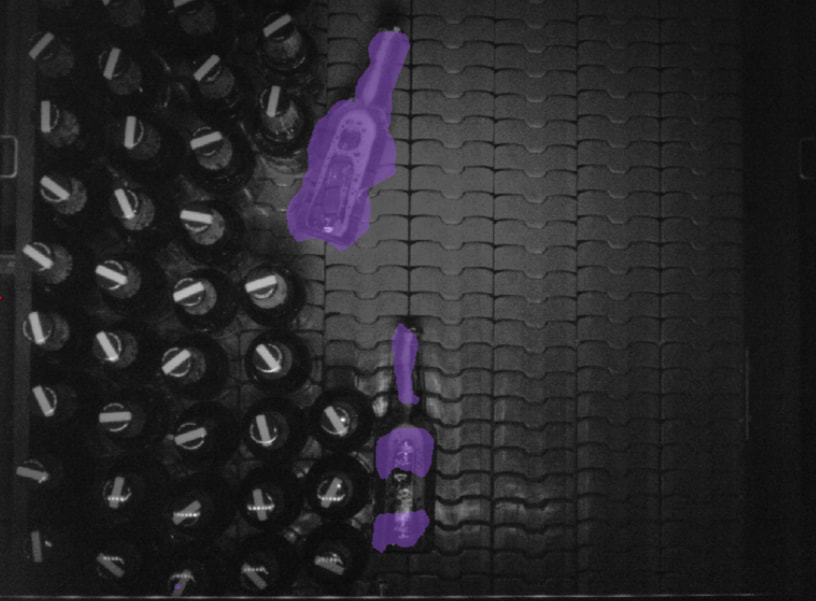
Manual inspection is hard to keep consistent, and the trickiest defects are often the ones no written rule quite captures. Deep learning vision systems work differently. They learn from thousands of labelled examples, so they can recognise a defect even when it doesn’t look exactly like the ones before. They handle new product variations without reprogramming and run at full line speed.
“Bringing AI vision into industrial processes that have been a bit behind the curve opens up a whole field of applications for Australian manufacturing.”
– Evan Robinson, Senior Controls Engineer, Applied Robotics
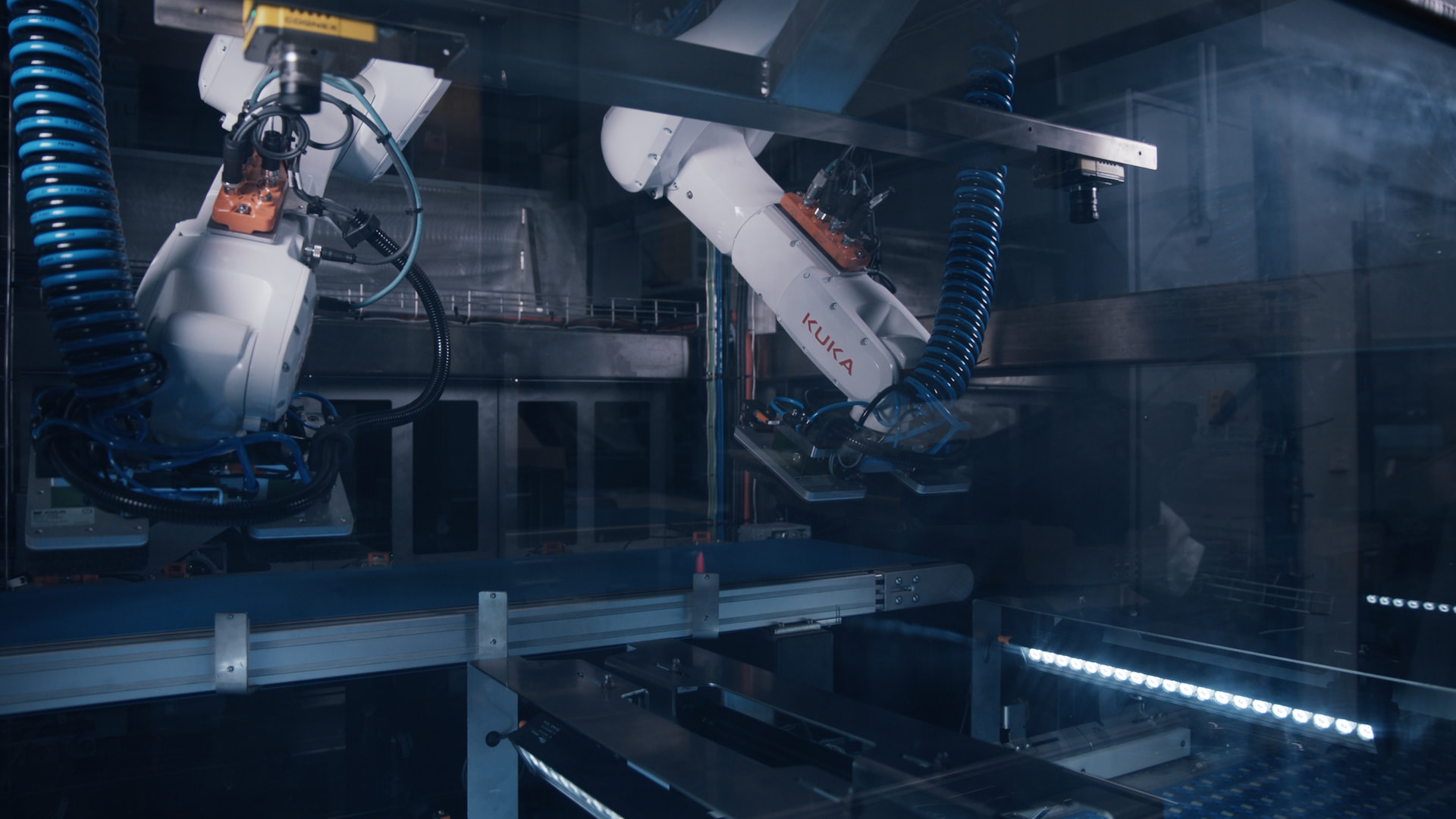
These are proven technologies that Applied Robotics has delivered in factories across the country for clients such as Arnott’s biscuits, Capral Aluminium, Legrand electrical and Unilever consumer goods.
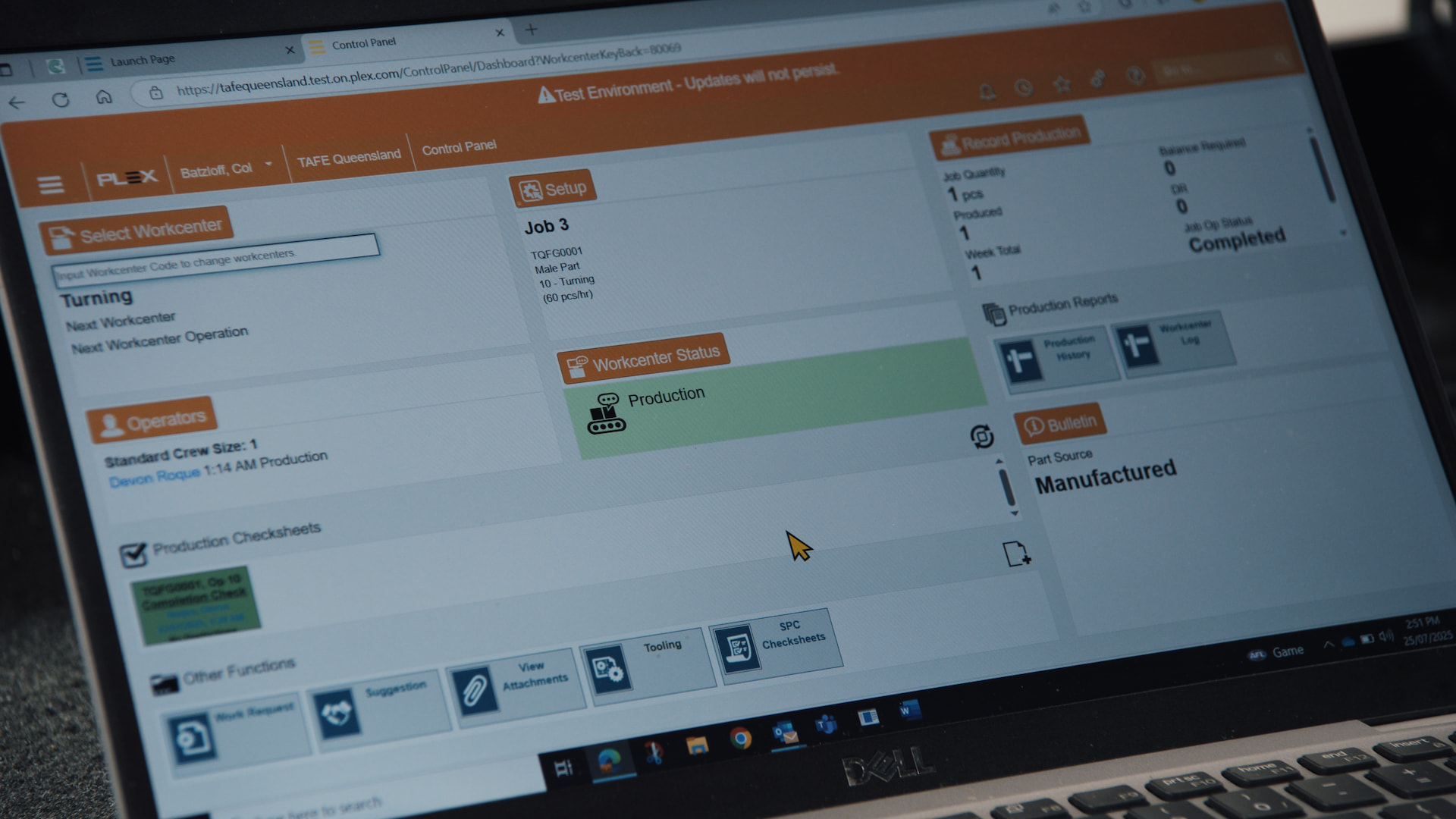
Many manufacturers run on instinct and end-of-shift tallies, with little real-time view of the floor. A manufacturing execution system (MES) tracks production as it happens and turns shop-floor activity into information the business can use to make decisions.
“Especially for small and medium enterprises, the traditional MES platforms have been out of reach from a cost and complexity perspective. But now, with innovations like pay-as-you-go cloud systems, there are standard modules that can be cost-effectively delivered to everyone.”
– Isaac Roach, Chief Operating Officer, Applied Robotics
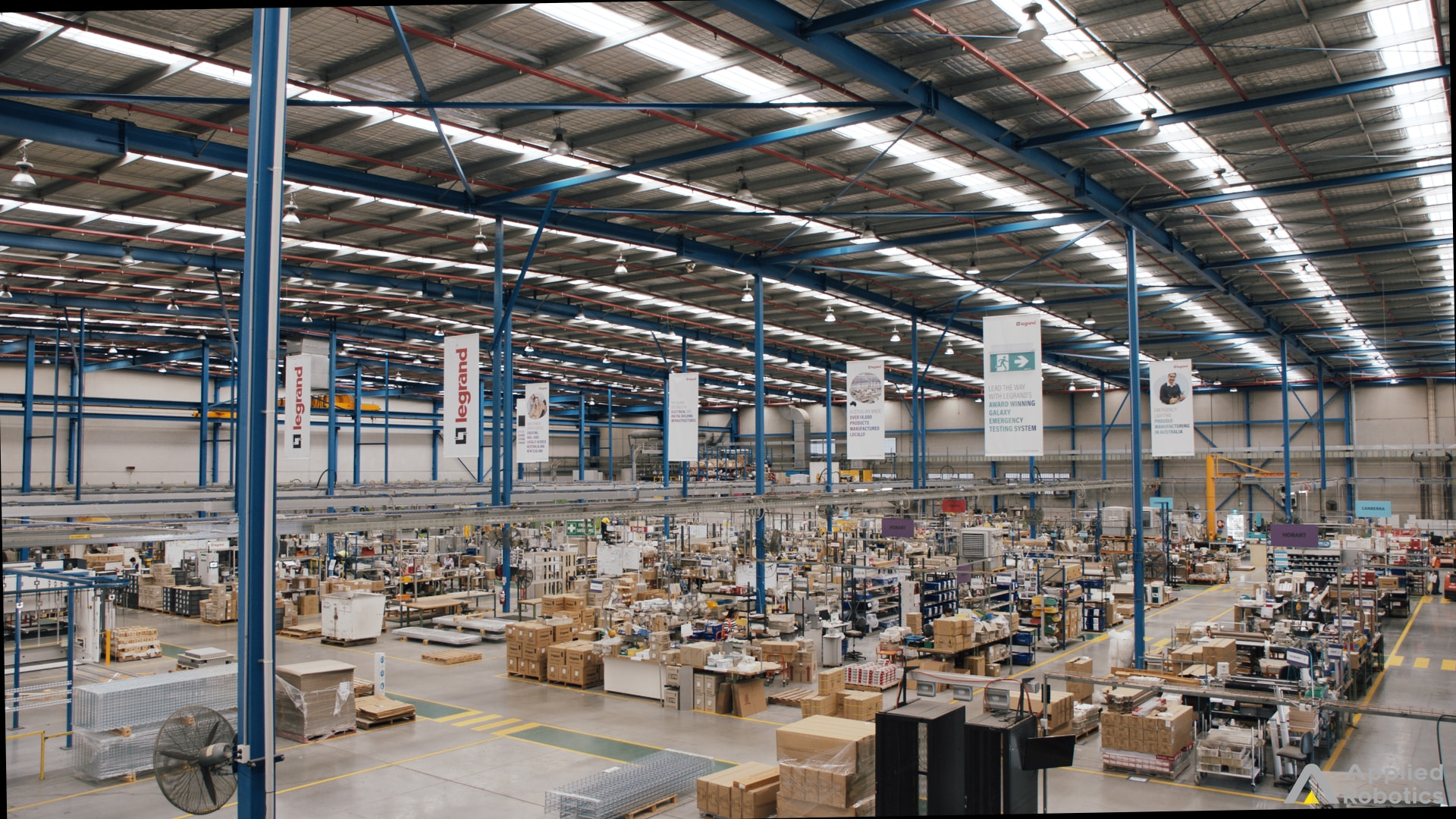
For manufacturers who already depend on automation, keeping it running at full capacity is an opportunity in itself. Plenty have robots, lines and systems in place and simply want to get more out of them, and grant funding can support an upgrade or expansion just as readily as a new installation.
With vision, AI, hardware and control systems all advancing in recent years, existing equipment can often do more than when it was first installed.
Operational Intelligence can provide the production data and performance visibility needed to measure improvements in throughput, utilisation and operational efficiency.
A $100,000 grant funds a very different project than a $1.5 million grant, and both can be worthwhile. Starting with a single cell or workstation lets you prove the value, build your team’s confidence and learn what works in your environment before committing further.
For a smaller manufacturer in particular, this staged approach makes automation far less daunting. Each step is designed to lead to the next, at a pace the business can absorb.
Where a proposed automation project involves a new or technically complex process, a Proof of Concept can validate the technology, process and expected performance before progressing to full-scale implementation.
Many manufacturing automation projects fail to meet their business-case cost targets or timelines. The cause usually lies in the scope and planning rather than the technology itself.
“Scope alignment is critical. If the initial spec has gaps, you can end up comparing quotes built on different assumptions, making it almost impossible to evaluate them fairly. It only takes one overlooked detail to throw out a solution.”
– Andrew Hambly, Head of Solutions, Applied Robotics
This is where Applied Robotics fits into a grant application, by helping manufacturers develop a project scope that meets both grant requirements and their operational needs.
A short pre-tender process is one way to get there. Before the specification is locked in, an experienced integrator can review the scope, point out opportunities the manufacturer may not have considered, and identify the kind of complexity that otherwise shows up later as costly variations. Modularity, future-proofing and ways to get more from the automation asset are possibilities that decades of delivery help bring into view.
For a grant-funded project, that thinking matters even more, because the funding is tied to the scope you set at the start. Getting it right is what turns a grant into a real return.”Our Automation Discovery Program helps manufacturers identify and prioritise automation opportunities, define project requirements and build a clear business case before progressing to detailed solution design.
Applied Robotics has spent 40 years designing and delivering automation for Australian manufacturers, with more than 700 solutions across food and beverage, building products, mining, electronics and more.
That includes work that is helping shape the industry’s next generation. At TAFE Queensland’s Ipswich campus, Applied Robotics designed and delivered a $3.6 million Smart Factory training lab, a working mirror of a real factory floor that integrates robotics, autonomous mobile robots, vision systems and digital twin technology. Students across Queensland now train on the same equipment they’ll use in industry.
“When this opportunity came up through TAFE Queensland, we jumped at it. It aligns with our vision and commitment to building Australia’s manufacturing future through robotics and local workforce development.”
– Isaac Roach, Chief Operating Officer, Applied Robotics
“Our vision is to transform Australian industry into a globally competitive manufacturing powerhouse. By leveraging advanced automation technologies, we can help local manufacturers not just survive, but lead in the global market.”
– Dr Paul Wong, Founder and Technical Director, Applied Robotics
To explore how creative automation solutions can transform your manufacturing capability, contact our expert team for a discussion.