When Legrand Australia needed to drive efficiency to maintain local light switch manufacturing in the face of global competition, they partnered with Applied Robotics for an intelligent automation solution that doubled output while maintaining quality and reducing labour costs.
Keeping high-volume production cost-effective and local
Part of the global Legrand network, Legrand Australia is a leading designer and manufacturer of over 15,000 electrical components under several premium brands, providing electrical infrastructure for residential and commercial applications nationwide.
At their Sydney facility, Legrand Australia was producing a high-volume commodity product – light switches – using a labour-intensive, manual assembly process. With every home and building requiring multiple switches, maintaining efficient and cost-effective production was crucial to their business model.
Faced with global supply chain disruptions during the pandemic, Legrand sought an Australian automation partner to streamline local production.
The limitations of manual assembly
The existing production process required continuous operator presence, with staff manually:
01
Inefficient load packing:
Selecting and orienting base components from bulk storage
The limitations of manual assembly
The existing production process required continuous operator presence, with staff manually:
01
Selecting and orienting base components from bulk storage
02
Placing fastening components in the correct position
03
Testing and inserting switch components
04
Operating a foot-press to stamp the components together
05
Completing QC checks throughout the process
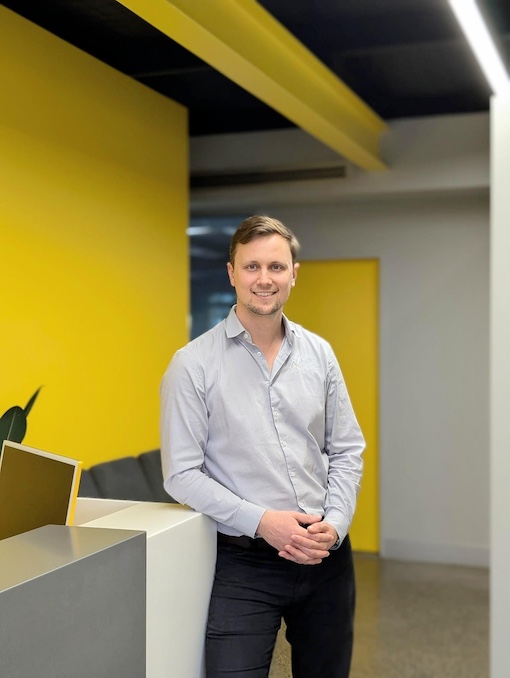
"With the automation technologies available today, this high-volume commodity Legrand identified the opportunity for automation.The process required constant operator attention across two shifts, performing repetitive, monotonous work," explains Andrew Hambly, Solutions General Manager at Applied Robotics.
This labour-intensive approach limited production throughput and put Legrand Australia at a competitive disadvantage against international manufacturers with lower labour costs.
Local intelligence combats the risk of offshoring
Due to similar cost pressures, many small components are moving offshore, so the light switch production line needs to remain competitive to avoid jeopardising Australian jobs and manufacturing capabilities.
“For Australian manufacturers, the challenge is clear – either innovate to stay competitive or risk losing production to overseas facilities.
Our objective was to help Legrand maintain and strengthen their local manufacturing capabilities through intelligent automation.“- Andrew Hambly, Solutions General Manager at Applied Robotics
Watch the assembly process from component feeding to finished product bagging
solution
Fully automated assembly with intelligent component handling
To address these challenges, Applied Robotics designed a comprehensive automation solution that transformed the entire assembly process from manual handling to autonomous operation.
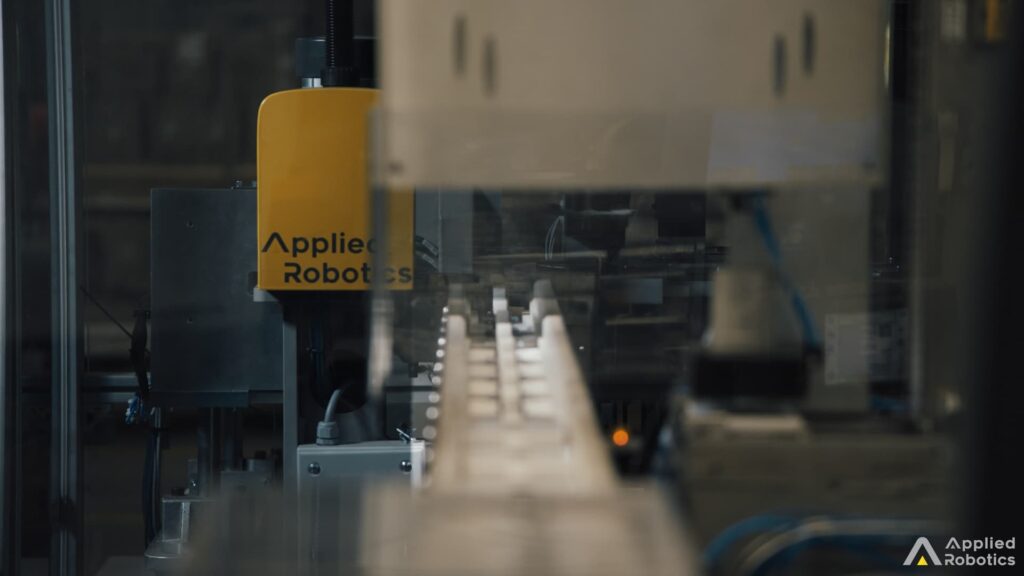
At the heart of the solution is a system of three bowl feeders that automatically sort, orient and singulate the key components:
Base components are fed from bulk storage into a vibratory bowl that guides them up a spiral track, orienting them correctly for placement
Switch components enter through a similar process, with an integrated vision system identifying their orientation for proper handling
Fastening components are automatically fed into the system in the correct position
“The bowl feeders eliminate the need for manual sorting and orientation. Staff can simply tip bulk components into the system and let it run, rather than handling each piece by hand,” explains Hambly.
Vision-guided robotics for fast and precise assembly
A key innovation in the system is the vision-guided robotic assembly process:
01
The system captures images of each switch component as it enters the assembly area
02
Software instantly analyses the orientation of the component
03
A robot picks up the switch and rotates it to the precise position based on the vision data
04
The robot places the component in the base, applying consistent force to ensure proper seating while simultaneously verifying the correct assembly
“The vision system examines each switch mechanism and tells the robot how to rotate it for perfect placement every time – something that previously relied on a manual operator,” says Hambly.
Continuous assembly motion eliminates bottlenecks
The automated assembly process takes place on a rotary table that moves components through multiple stations:
01
Grid plates are loaded onto the table at the first position
02
The table rotates to a station where screw clusters are applied
03
Next, the vision-guided robot places the switch mechanism
04
After assembly, the components continue to a cover plate application station
05
Finally, completed assemblies are bagged automatically
This approach enables continuous production without stopping for component changes, with multiple assemblies being processed simultaneously at different stages.
Easily switch between switch types and styles
The flexible system allows Legrand to adapt to different products to meet demand:
The automated assembly process takes place on a rotary table that moves components through multiple stations:
The flexible system allows Legrand to adapt to different products to meet demand:
Programmable ‘recipes’ enable operators to switch between product configurations
The system handles configurations from single switches up to six-gang units
Traditional or contemporary designs can be processed with minimal changeover time
“Australian manufacturers don't need to concede high-volume production to overseas competition. With the right automation approach, we can maintain and grow our local manufacturing capabilities, preserving jobs and expertise while remaining globally competitive.”
Andrew Hambly
results
Doubled output with reduced labour and enhanced quality
Doubled production output compared to the previous manual process
Dramatically reduced labour requirements from continuous operator presence to periodic monitoring
Enhanced product quality through consistent component placement and assembly
Increased production flexibility with rapid changeover between different product types
Preserved local manufacturing by making Australian production cost-competitive
The best is yet to come
From constant operation to monitoring multiple processes
The most immediate impact has been the change in staff interaction with the production process.
“This kind of automation maximises human input by transforming the entire operation. Instead of an operator being tied to the machine for an entire shift, staff can now oversee multiple processes, returning periodically to replenish components,” explains Hambly.
This switch from dedicated operators to monitoring roles has allowed Legrand to optimise its workforce. Staff can now tend to multiple machines or perform various tasks throughout the facility.
Strengthening Australian manufacturing
Perhaps the most significant outcome is how the project has helped Legrand maintain and potentially expand their Australian manufacturing operations.
“When products can’t be produced cost-effectively locally, they inevitably move offshore. What we’ve done here is help Legrand stay competitive while keeping manufacturing jobs in Australia,” says Hambly.
With the success of this project, Legrand is better positioned to maintain its Australian manufacturing presence and potentially return more product lines to local production.
Building a competitive future for Australian manufacturing
The partnership between Applied Robotics and Legrand Australia demonstrates how intelligent automation can make local manufacturing viable, even for high-volume commodity products facing intense international competition.
Combining innovative feeding systems, vision technology and flexible robotics, Applied Robotics has helped transform a manual assembly process into an efficient, adaptable production system that strengthens Legrand’s competitive position.
“Australian manufacturers don’t need to concede high-volume production to overseas competition,” concludes Hambly.
“With the right automation approach, we can maintain and grow our local manufacturing capabilities, preserving jobs and expertise while remaining globally competitive.”
This same approach can help other Australian manufacturers automate the production of high-volume components that would otherwise be at risk of moving offshore.
To explore how custom automation solutions can transform your manufacturing operations, contact our expert team for a discussion.